
February 2026 - TAEL SPECIAL TAX UPDATE
Stay up to date with the key tax changes coming in 2026. Our newsletter breaks down updates, new obligations, and what businesses need to prepare for.
Helping NZ business owners stay ahead of upcoming payroll, tax, and compliance changes.
- Tael Business Bootcamp
- Impacts of the 2026 Payroll, ACC & Tax Changes for Small Businesses
- IRD Is Cracking Down Hard on Overdue Tax Debt — What Business Owners Need to Know
- Record‑Keeping Requirements (NZ Law)
Tael Business Bootcamp
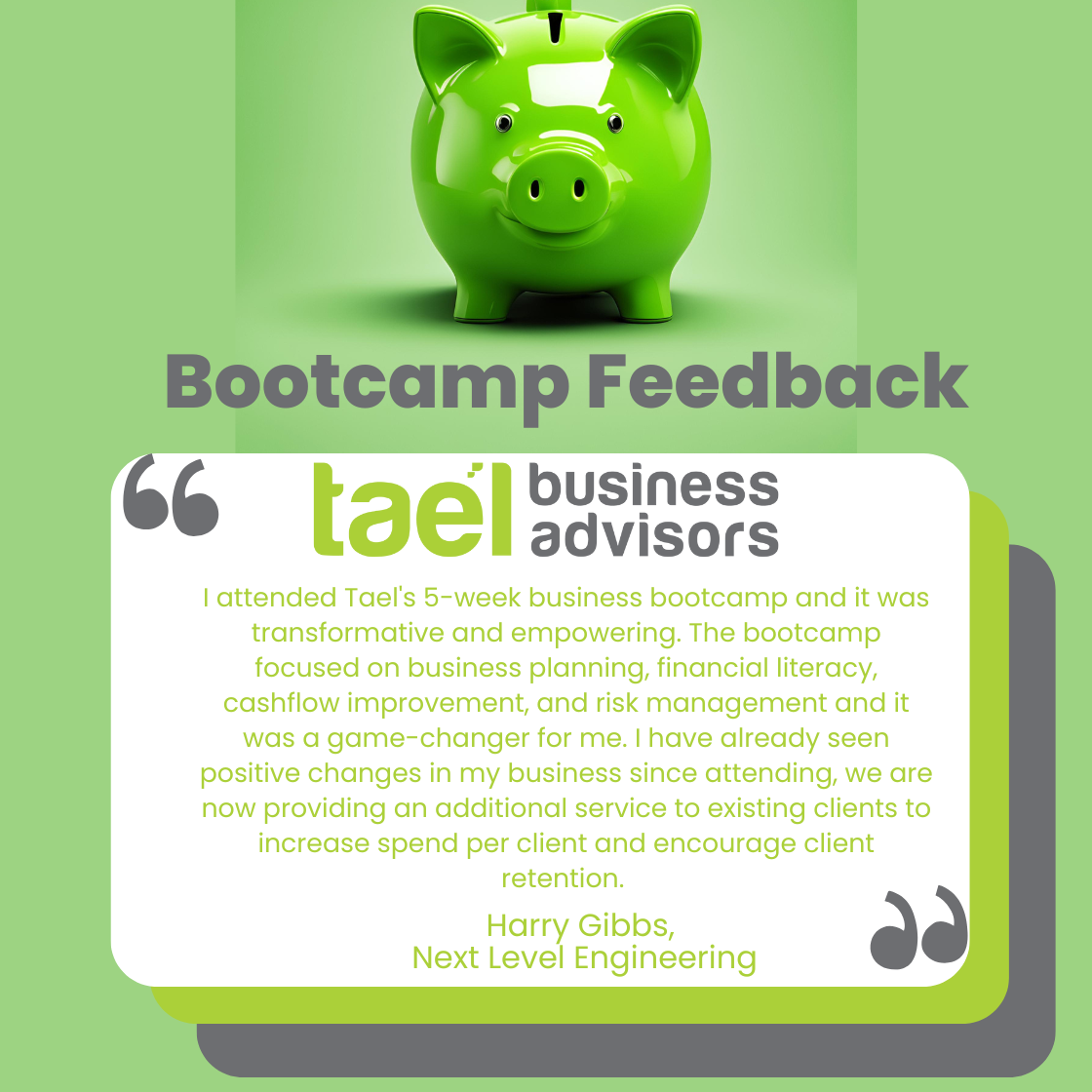
Tael’s Business Bootcamp is a hands-on, no‑fluff crash course for business owners who want to level up fast. In just six power sessions, you’ll learn how to build a business plan that actually works, make sense of your numbers without the boring jargon, spot the drivers that grow profit, manage real‑world risks, and put simple systems in place that make your business run smoother. It’s fast, practical, and built to help you win.
We’re kicking off our next bootcamp on Tuesday, 17th March, and we’d love to have you join us! This bootcamp is designed to help you build confidence, sharpen your skills, and get hands‑on support with the areas that matter most in your business.
Workshop Sessions:
Session One: Defining your Success - 10am-12pm Tuesday 17th March
Session Two: Know your Numbers - 10am-12pm Tuesday 24th March
Session Three: Cashflow Freedom - 10am-12pm Tuesday 31st March
Session Four: Managing your Risk - 10am-12pm Tuesday 7th April
Session Five: Personalised 1-hour Value Gap Analysis - week of 27th April
Session Six: Post-Bootcamp Progress & Integration 1-hour Review (3 Months On)
What You’ll Gain:
- Defining Success: Define what success means for you as we work through a smart Business Plan and suggest strategies to grow your profit and cashflow.
- Know your Numbers: Numbers tell the story of your business. By understanding your numbers, it can support better decision making and empower you to implement the right strategies.
- Cashflow Improvement Techniques: Learn how to manage your finances more effectively, optimize cash flow, and ensure your business remains financially healthy.
- Managing Risk: Gain insights into identifying, assessing, and mitigating risks that could impact your business. Our experts will help you develop a risk management plan to protect your business from unforeseen challenges.
- Value Gap: A one on one meeting reviewing your numbers and the Value Gap Analysis.
- Post Bootcamp Progress: An extra one on one meeting to reflect on progress since bootcamp. We will provide you support integrating actions and sustain momentum to continue your growth journey.
Early Bird: $1,995+GST
Non-client Early Bird: $2,250+GST
Standard: $2,500+GST
If you’re thinking about joining, now’s the perfect time — early bird pricing is available until 28th February. It’s a great chance to secure your spot at the best rate and make sure you don’t miss out.
Spaces tend to fill quickly, so jump in early and lock in your place!

Impacts of the 2026 Payroll, ACC & Tax Changes for Small Businesses
Impact on Employees
These changes will directly affect employee take home pay from February–April 2026. Business owners should be prepared for staff questions and potential confusion in this regard.
The changes to be aware of and plan for are:
- ACC Earners’ Levy Increase
- ACC earners’ levy is increasing from $1.67 to $1.75 per $100 of earnings.
- This affects all employees and will result in slightly lower net pay each pay cycle.
- The change applies to any pay run processed after 1 April, even if part of the pay period falls in March.
- KiwiSaver Minimum Employee Contribution Increasing to 3.5%
- The minimum employee contribution will rise from 3% to 3.5%.
- Employees can apply for a temporary reduction back to 3% for 3–12 months, but:
- Applications open from 1 February.
- Employees must apply personally — employers cannot apply on their behalf. Temporary rate reduction link to apply.
- If they do not apply for a reduction, their net pay will decrease.
- Minimum Wage Increase
- Minimum wage will increase to $23.95 from 1st of April.
- This primarily affects employees currently paid close to minimum wage; those already above it may not require changes unless part of a standard wage review process.
Impact on Employers
These changes create increased payroll costs for all employers with staff and may require updates to budgets and cashflow planning.
- Employer KiwiSaver Contribution Increasing
- Employer minimum contribution will also increase to 3.5%, unless an employee has a temporary reduction approved (in which case the employer may remain at 3%).
- This is a direct increase in labour costs, especially for employers with large teams or high salary bases.
- Higher Wage Costs Due to Minimum Wage
- While not all staff will be directly affected, businesses must consider:
- Whether employees slightly above minimum wage should receive an adjustment to maintain internal equity.
- Flow on effects for supervisors or team leads who expect to remain above entry level staff on effects for supervisors or team leads who expect to remain above entry level staff
- Timing of ACC Levy Increase
- The increased ACC levy applies to any pay run processed after 1 April, regardless of the period covered.
- Employers should be aware of small changes in payroll cost per pay run from April onwards.
- Government Contribution Reduction
- Government contribution to KiwiSaver reduces from $521.43 to $260.72/year from 1 July 2025.
- This may have retirement planning impacts for:
- Staff on lower incomes
- Sole traders
- Contractors
- Part timers contributing less consistently
- High Earners Losing Government Contribution
- Anyone earning $180k+ will no longer be eligible for government contributions.
- Relevant for:
- High income salaried employees
- Sole trader contractors in trades who may have strong earnings years
What Business Owners Should Consider Now
- Cashflow & Budgeting Adjustments
- Payroll costs will increase through higher KiwiSaver and ACC levies.
- Even a 0.5% KiwiSaver increase can be meaningful when spread across a full team.
- Clients should review:
- 2026–27 budgets
- Cashflow forecasts
- Pricing strategy (especially for labour heavy service industries)
- Review Employment Agreements
- Check that employment agreements reflect:
- New minimum wage
- Updated KiwiSaver settings
- Any internal remuneration structure that may need alignment
- Communicating With Staff
- Employees may be surprised to see lower take home pay.
- Businesses should proactively explain:
- ACC levy changes
- KiwiSaver increases
- How temporary contribution reductions work
- Payroll Software Updates
- Most payroll systems (Smartly, Pay Hero, Xero Payroll, etc.) will update automatically.
- Employers should still double check settings, especially:
- KiwiSaver employer %
- Employee contribution rates for anyone with a temporary reduction
- Minimum wage rates from 1 April
- Seek Advice Early
- We encourage our clients to contact us if:
- Their payroll costs will materially increase
- They need updated cashflows or budgets
- They want to review pricing
- They are unsure how the employee KiwiSaver reduction process works
- They have high earners or contractors to consider
- They have any questions on these changes.
Click here for more information on the changes

IRD Is Cracking Down Hard on Overdue Tax Debt — What Business Owners Need to Know
Inland Revenue hasn’t changed the tax rules, but it has changed how quickly and firmly it enforces them. This shift affects both businesses and individuals — and it means old assumptions about “getting time to sort things out later” no longer hold.
Enforcement Has Become Faster and Less Flexible
Even though legislation hasn’t changed, IRD’s internal systems now prioritise overdue tax much earlier. This means:
- The time between first contact and enforcement is much shorter
- Instalment plans are reviewed more aggressively
- Missed payments trigger quick escalation
- Enforcement may begin while discussions are still underway
In the past, many taxpayers had a long runway to negotiate. That’s no longer the case.
Outcomes Are Now Highly Variable
Two taxpayers with nearly identical situations can now experience completely different outcomes:
- One may be given time, flexibility, and a workable instalment plan
- Another may face default notices, account deductions, or fast compounding interest
It’s not the law that’s different — it’s timing, discretion, and who happens to manage the file.
This unpredictability makes it harder for business owners to plan and increases the risk that a manageable issue turns into a serious problem.
Waiting Is No Longer Neutral — It Makes Things Worse
Previously, delaying engagement didn’t always cause major issues. Today:
- Delays are treated as noncompliance
- Enforcement can start while you're still talking with IRD
- Each week of inaction increases the financial cost
- Penalties and interest compound quickly once IRD locks the file for enforcement
Even reasonable proposals may be rejected if they’re submitted too late.
IRD Now Wants a “Credible Plan” — Not Just Contact
Reaching out to IRD without a structured proposal often does more harm than good.
To be taken seriously, taxpayers must have:
- A realistic repayment plan
- Accurate cashflow projections
- A clear understanding of how much they can afford to pay and when
- Evidence they can stick to the plan
This is why many businesses struggle to negotiate on their own — IRD needs numbers that stand up to scrutiny.
The Real Risk Isn’t the Tax — It’s the Timing
In today’s environment, getting things wrong at the wrong time is what creates real damage.
What used to be a small problem can now become an entrenched one due to:
- Early escalation
- Rapid interest compounding
- Reduced flexibility
- Loss of discretion once enforcement begins
Uncertainty is now the biggest cost.
What we recommend for Clients
To avoid penalties, compounding interest and enforcement action, business owners should:
- Get in touch early — before IRD does - Once enforcement starts, it's harder (and more expensive) to fix.
- Have a structured plan ready - We help clients prepare:
- realistic cashflow projections
- repayment schedules
- supporting documents IRD is now expecting
- Never ignore IRD letters or overdue notices - Delaying even a week can lead to rapid escalation.
- Ask Tael for help negotiating - We can help ensure proposals are:
- credible
- accurate
- submitted in a way IRD will accept
- Review cashflow regularly
With the new ACC, KiwiSaver, and wage changes increasing payroll costs, more of you may be tight on cashflow — which increases risk of falling behind.
- Enforcement occurs earlier and faster.
- Delays are treated as non‑compliance.
- IRD expects a credible repayment plan.
We’ve got an informative Tax Traders webinar coming up March 18th at 10am, and it’s the perfect chance to get practical tips on managing your tax with the IRD.
Whether you want to feel more in control of your payments or avoid building up unnecessary debt with the IRD, this session will walk you through smart, simple strategies that really work.
Register for Tax Traders webinar

Keen to get a head start? We’ve also put together a helpful blog where you can learn more about how to stay on top of your tax throughout the year. It’s an easy, jargon‑free guide designed to make tax feel a whole lot less stressful.

Record‑Keeping Requirements (NZ Law)
NZ businesses must meet legal requirements for storing and retaining financial records. Good recordkeeping reduces audit risk and makes compliance simpler.
Legal Requirements
- Records must be kept for at least 7 years.
- They can be stored electronically — paper copies are not required if the digital version is clear and accurate.
- Electronic records must be readable, accessible, and secure.
- Records must be stored in a way that prevents alteration and allows retrieval if IRD requests them.
Records That Can Be Stored Digitally
- Sales invoices
- Supplier bills and expenses
- Bank statements
- Payroll records
- GST records
If unsure whether your current storage systems meet IRD’s expectations, we can review and recommend best practices.

If you have any questions or concerns for us, please don’t hesitate to get in touch with us.
From
THE TAEL TEAM
Ready to strengthen your business? Let’s work together. Schedule your no-cost initial Prospective Client Meeting (PCM) to see what’s possible.
